Download PMI Risk Management Professional.PMI-RMP.Pass4Success.2026-10-19.118q.vcex
| Vendor: | PMI |
| Exam Code: | PMI-RMP |
| Exam Name: | PMI Risk Management Professional |
| Date: | Oct 19, 2026 |
| File Size: | 296 KB |
How to open VCEX files?
Files with VCEX extension can be opened by ProfExam Simulator.
Discount: 20%

Demo Questions
Question 1
A financial institution is creating a new product database tor their clients. The project sponsor of this project is concerned about failure of the digital platform that hosts the database. The risk manager states that this risk will only occur if there is a major power outage; however, the financial institution has back-up power generators in place.
What type of risk is being referred to here?
- Major risk
- Residual risk
- Secondary risk
- Environment risk
Correct answer: B
Explanation:
Residual risks are those that remain after implementing risk response strategies. In this scenario, the primary risk is a major power outage that could lead to the failure of the digital platform hosting the new product database. The financial institution has mitigated this risk by installing backup power generators. However, the possibility of a power outage still exists, and the effectiveness of the backup generators cannot be guaranteed with absolute certainty. Therefore, the remaining risk, despite the mitigation measures, is classified as residual risk.PMI Risk Management Study Guide Reference:The PMI-RMP Exam Content Outline defines residual risk as the risk that remains after risk responses have been implemented, highlighting the necessity of monitoring these risks throughout the project lifecycle.
Question 2
A project manager is identifying risks on a project and decides to use a risk checklist to gather historical data accumulated from similar projects. With several different historical project files to choose from, which two pieces of information should the project manager include in their risk checklist? (Choose two.)
- Budget variance data from previously completed projects.
- Project scope and cost management plans from previous projects.
- Lessons learned from similar completed projects.
- Previous project risks that may be relevant to this project.
- Stakeholder analysis metrics from projects with similar risk profiles.
Correct answer: C, D
Explanation:
A risk checklist is a tool for identifying risks based on historical information and knowledge from similar projects. It is a list of potential risk sources or categories that can be used to prompt the project team to consider possible risks that may affect the project. A risk checklist should include information that is relevant and useful for identifying risks, such as lessons learned from similar completed projects and previous project risks that may be relevant to this project. These two pieces of information can help the project manager to learn from past experiences and avoid repeating the same mistakes or overlooking the same threats or opportunities. A risk checklist should not include information that is not directly related to risk identification, such as budget variance data from previously completed projects, project scope and cost management plans from previous projects, or stakeholder analysis metrics from projects with similar risk profiles. These pieces of information may be useful for other aspects of project management, such as planning, monitoring, or controlling, but they are not helpful for identifying risks on a project.Reference:PMI. (2017). A Guide to the Project Management Body of Knowledge (PMBOK Guide) -- Sixth Edition. Chapter 11: Project Risk Management, p. 397. 5Lessons learned and previous project risks are valuable sources of information for creating a risk checklist. They provide insights into potential risks that may impact the current project and help the project manager develop appropriate risk responses. Budget variance data, project scope and cost management plans, and stakeholder analysis metrics, although useful, are not directly related to risk identification. (Reference: Project Management Institute. A Guide to the Project Management Body of Knowledge (PMBOK Guide) -- Sixth Edition, Section 11.2)
Question 3
A risk manager is preparing for the first meeting with their project sponsor on a potential project for a large client. The risk manager reviews their newly developed project risk register to identify any risks that should be analyzed further and begins by prioritizing the probability column based on the following criteria:
1 = Very Low
2 = Low
3 = Medium
4 = High
5 = Very High
What type of risk analysis is the risk manager performing?
- Scenario-based risk analysis
- Quantitative risk analysis
- Qualitative risk analysis
- Monte Carlo analysis
Correct answer: C
Explanation:
The risk manager is performing a qualitative risk analysis by prioritizing risks based on their probability of occurrence. Qualitative risk analysis involves evaluating and prioritizing risks based on their likelihood and impact using a predefined scale. This approach helps in determining which risks require more attention and should be subjected to further analysis or immediate action.PMI defines qualitative risk analysis as a process that uses a relative scale to assess the probability and impact of risks, which is what is being done in this scenario.
Question 4
The project manager performed' a variance analysis on the project during the execution phase. The variances were shown as increasing
What does this result imply?
- The uncertainty and risk are increasing.
- The project schedule is lagging behind.
- There is no potential for future deviation.
- The project is over budget.
Correct answer: A
Explanation:
Increasing variances during the execution phase imply that the uncertainty and risk are increasing, as the project performance is deviating from the planned values.According to the PMBOK Guide -- Sixth Edition1, variance analysis is a technique used to compare the actual performance of the project against the planned or expected performance. It can be applied to various aspects of the project, such as scope, schedule, cost, quality, and risk. Variance analysis can help identify deviations from the baseline and determine the causes and impacts of those deviations. If the variances are shown as increasing, it means that the actual performance is deviating more and more from the planned performance, which implies that the uncertainty and risk are increasing. This could affect the project objectives and deliverables, and require corrective or preventive actions to bring the project back on track. The other options are not correct, as they are either too specific (B and D) or contradictory to the result of the variance analysis.Reference:PMBOK Guide -- Sixth Edition, pages 262-263.
Question 5
When selecting strategies as an activity of Plan Risk Response, what is the overall goal?
- Select the strategies with the least overall impact to resources.
- Select the strategies with the least financial impact.
- Select the strategies with the greatest overall positive influence.
- Select the strategies with the greatest benefit to stakeholders.
Correct answer: C
Explanation:
The overall goal of selecting strategies during the Plan Risk Response activity is to choose those strategies that have the greatest overall positive influence on the project, considering factors such as cost, schedule, and resources.According to the PMI Risk Management Professional (PMI-RMP) Examination Content Outline1, one of the tasks in the domain ofRisk Responseis to select risk response strategies based on the risk appetite and tolerance of the organization and stakeholders1. The overall goal of selecting risk response strategies is to select the strategies with the greatest overall positive influence on the project objectives, such as scope, schedule, cost, quality, etc.The risk response strategies should aim to enhance the opportunities and reduce the threats to the project, while considering the cost-benefit analysis, the feasibility, and the alignment with the project goals and stakeholder expectations2.The risk response strategies should not be selected based on the least overall impact to resources, because that may not be the most effective or efficient way to address the risks, and it may ignore the potential benefits of some strategies that may require more resources but also deliver more value3. The risk response strategies should not be selected based on the least financial impact, because that may not be the most relevant or comprehensive criterion to evaluate the risks, and it may overlook other aspects of the project, such as quality, customer satisfaction, reputation, etc.that may also be affected by the risks4.The risk response strategies should not be selected based on the greatest benefit to stakeholders, because that may not be the most realistic or achievable goal, and it may create conflicts or trade-offs among different stakeholder groups that may have different or competing interests, needs, and expectations5.Reference:1: PMI Risk Management Professional (PMI-RMP) Examination Content Outline, page 102: A Guide to the Project Management Body of Knowledge (PMBOK Guide) -- Sixth Edition, page 4403: A Guide to the Project Management Body of Knowledge (PMBOK Guide) -- Sixth Edition, page 4414: A Guide to the Project Management Body of Knowledge (PMBOK Guide) -- Sixth Edition, page 4425: A Guide to the Project Management Body of Knowledge (PMBOK Guide) -- Sixth Edition, page 518.
Question 6
In the early stages of a manufacturing project, a risk manager has identified a risk with a component provided by an external supplier that might be delayed. The delay may or may not be significant to the project.
What should the risk manager do?
- Agree with the external supplier on the timeline.
- Register the risk with a medium impact.
- Align with stakeholders on the risk threshold.
- Engage another supplier with shorter delivery times.
Correct answer: C
Explanation:
Setting risk thresholds in collaboration with stakeholders ensures clarity on what is considered tolerable risk. PMBOK Guide and ISO 31000 state:'Risk thresholds reflect the degree of risk that stakeholders are willing to accept. These should be defined collaboratively at the start of the project.'--- PMBOK Guide, 6th Edition, Section 11.1'The organization should define its risk criteria and thresholds, in consultation with stakeholders.'--- ISO 31000:2018, Section 6.3PMBOK Guide, 6th Edition, Section 11.1ISO 31000:2018, Section 6.3
Question 7
A certain risk is identified for a major project, and the risk response is planned. However, the analysis reveals a high probability for a secondary risk which will be tolerated based on the organization's risk thresholds. The secondary risk is subsequently registered. During project execution, the primary risk occurs, the planned action is taken, and the secondary risk emerges
What two actions should the risk owner take? (Choose two.)
- Implement the secondary risk response and update the project documents.
- Conduct meeting with all stakeholder to agree on post impact solutions.
- Set the corresponding trigger conditions to the secondary risk.
- Engage the project manager to authorize the secondary risk's response.
- Update and communicate assessments of the secondary risk's impact.
Correct answer: A, E
Explanation:
The risk owner should implement the secondary risk response, as it is now being tolerated, and update the project documents accordingly. They should also update and communicate the assessments of the secondary risk's impact to ensure everyone is aware of the situation.According to the PMI-RMP Handbook1, the risk owner is responsible for implementing the risk response plan and monitoring the risk and its secondary risks. Therefore, the risk owner should take the following two actions when the secondary risk emerges:Implement the secondary risk response and update the project documents. This action is consistent with the risk response strategy of tolerance, which means accepting the risk and its consequences. The risk owner should execute the planned response for the secondary risk, such as contingency plans or fallback plans, and update the relevant project documents, such as the risk register, the risk report, and the lessons learned register, to reflect the current status and impact of the risk.Update and communicate assessments of the secondary risk's impact. This action is consistent with the risk monitoring and control process, which involves tracking the identified risks, evaluating their impact and probability, and reporting the risk information to the appropriate stakeholders. The risk owner should reassess the secondary risk's impact on the project objectives, such as scope, schedule, cost, and quality, and communicate the results to the project manager and other relevant stakeholders, such as the sponsor, the customer, and the team members.:PMI-RMP Handbook1PMBOK Guide, 6th edition, Chapter 11: Project Risk Management2
Question 8
A risk manager reviews a Monte Carlo schedule risk analysis model before sharing the results with the project manager. The risk manager notices that activity correlations were not included in the model.
What is an effect of adding the correlation to the model?
- Allows more risks to be included in the model.
- Reduces the project completion duration.
- Increases the standard deviation of the model.
- Increases the probability of correlated activities finishing on time.
Correct answer: C
Explanation:
Adding correlation to the model accounts for the relationship between activities, which can result in increased variability in the model's outcomes. This will increase the standard deviation, which is a measure of the uncertainty in the model.According to the PMBOK Guide, 6th edition, Chapter 11: Project Risk Management1, an effect of adding the correlation to the Monte Carlo schedule risk analysis model is that it increases the standard deviation of the model. This is because:Correlation is the statistical relationship between two or more variables. In a schedule risk analysis, correlation can be used to model the dependency between the durations of different activities. For example, if two activities are positively correlated, it means that if one activity takes longer than expected, the other activity is also likely to take longer than expected. Conversely, if two activities are negatively correlated, it means that if one activity takes longer than expected, the other activity is likely to take shorter than expected.A Monte Carlo schedule risk analysis is a simul-ation technique that uses random values for uncertain variables, such as activity durations, to generate possible outcomes for the project schedule. The simul-ation is repeated many times to produce a probability distribution of the project completion date and duration. The standard deviation is a measure of the variability or dispersion of the distribution. A higher standard deviation means that the distribution is more spread out and less predictable.Adding correlation to the Monte Carlo schedule risk analysis model increases the standard deviation of the model because it introduces more variability and uncertainty to the simul-ation. Correlated activities can have a cumulative effect on the project schedule, either positively or negatively, depending on the direction and strength of the correlation. This can result in more extreme outcomes for the project completion date and duration, which increase the spread of the distribution and the standard deviation.:PMBOK Guide, 6th edition, Chapter 11: Project Risk Management1Risk Management Professional (PMI-RMP) Exam Cert Guide2
Question 9
The risk manager of a major project needs to ensure the organizational process assets (OPAsj are updated as a result of risk management activities. How will the risk manager accomplish this?
- Ensuring that the project sponsor is kept well-informed
- Arranging periodic risk: management process audits
- Communicating the status of risks regularly to stakeholders
- Monitoring costs with intervention when necessary
Correct answer: B
Explanation:
The risk manager can ensure the organizational process assets (OPAs) are updated as a result of risk management activities by arranging periodic risk management process audits. These audits help evaluate the effectiveness of risk management processes and identify areas of improvement, leading to updates in the OPAs.According to the PMBOK Guide, one of the tools and techniques for the monitor risks process isaudits. Audits are examinations of the risk management processes to ensure that they are aligned with the project objectives and are following the organizational policies and procedures. Audits can also identify any gaps, inconsistencies, or areas of improvement in the risk management activities. By conducting periodic audits, the risk manager can ensure that the organizational process assets are updated and reflect the current state of the project risk management.Some of the organizational process assets that can be updated as a result of audits are risk management templates, risk categories, risk databases, and lessons learned1.Reference: PMBOK Guide, 6th edition, pages 456-457, 481-4821; PMI-RMP Exam Content Outline, 2015, page 9
Question 10
The project sponsor asks the project manager about the accuracy of the project data. The project manager realizes that some risks have not been updated recently.
What should the project manager do regarding those risks?
- Review the assumptions analysts
- Conduct a checklist analysis on each risk
- Create a risk response plan for those risks
- Review the risk register to check for the new risks
Correct answer: D
Explanation:
If the project manager realizes that some risks have not been updated recently, they should review the risk register to check for new risks and ensure that all risks are accurately documented and updated.The risk register is a document that contains information about the identified risks, their analysis, and their response plans. It is updated throughout the project life cycle as new risks emerge, existing risks change, or risks are closed. The project manager should review the risk register regularly to ensure that the project data is accurate and reflects the current risk situation. Reviewing the risk register also helps the project manager to identify any new risks that may have occurred since the last update, and to plan appropriate responses for them.Reference:PMI, Project Risk Management, 2nd edition, 2019, p.67-681
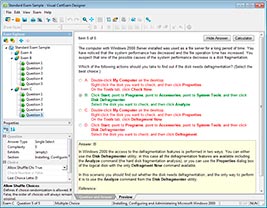
HOW TO OPEN VCE FILES
Use VCE Exam Simulator to open VCE files
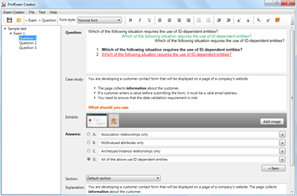
HOW TO OPEN VCEX AND EXAM FILES
Use ProfExam Simulator to open VCEX and EXAM files
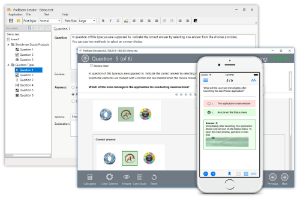
ProfExam at a 20% markdown
You have the opportunity to purchase ProfExam at a 20% reduced price
Get Now!